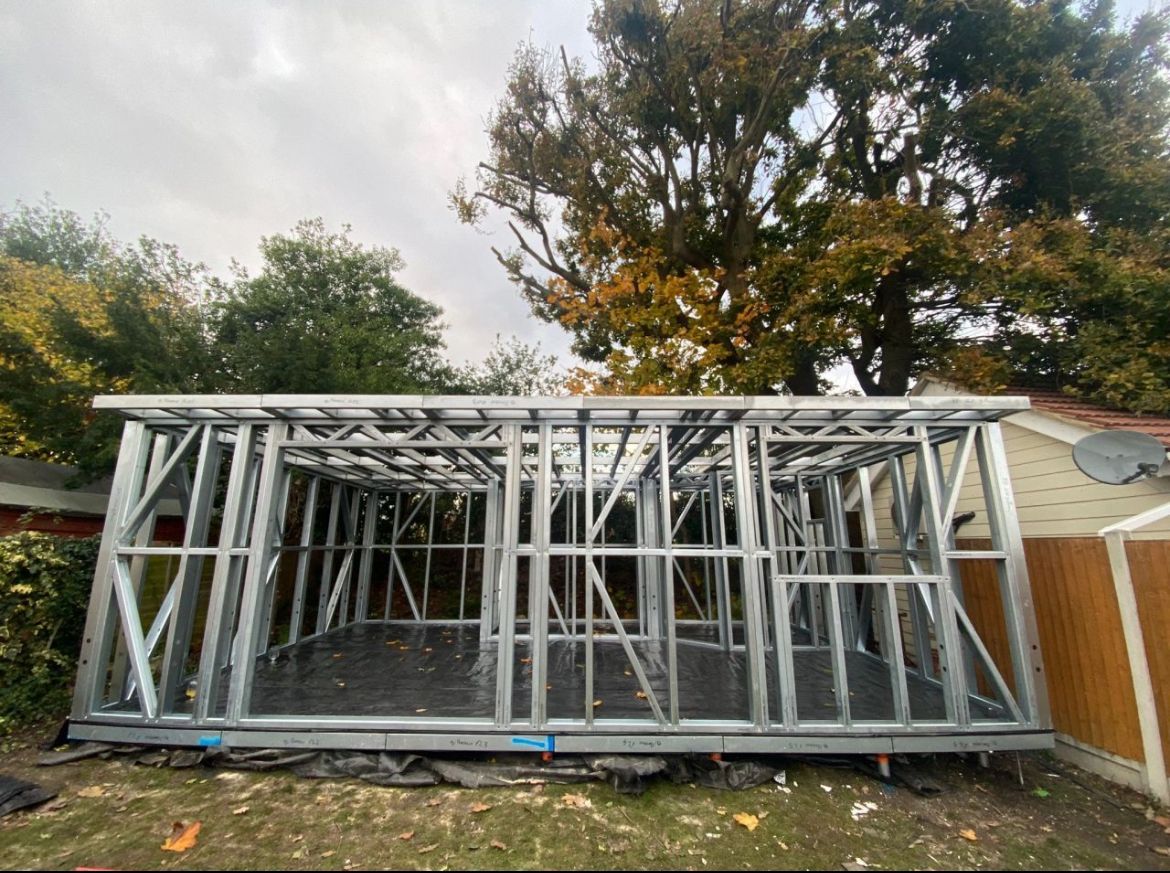
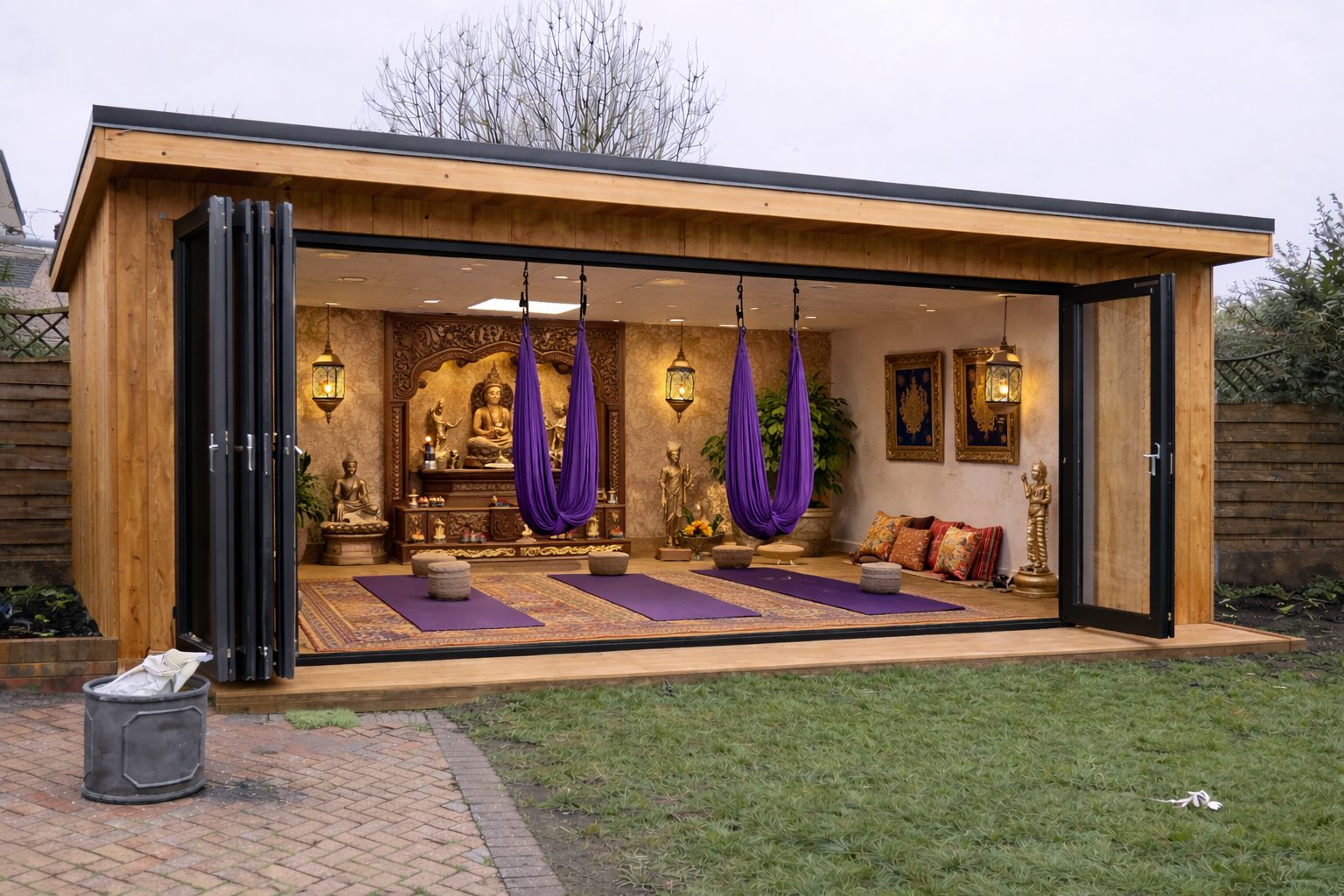
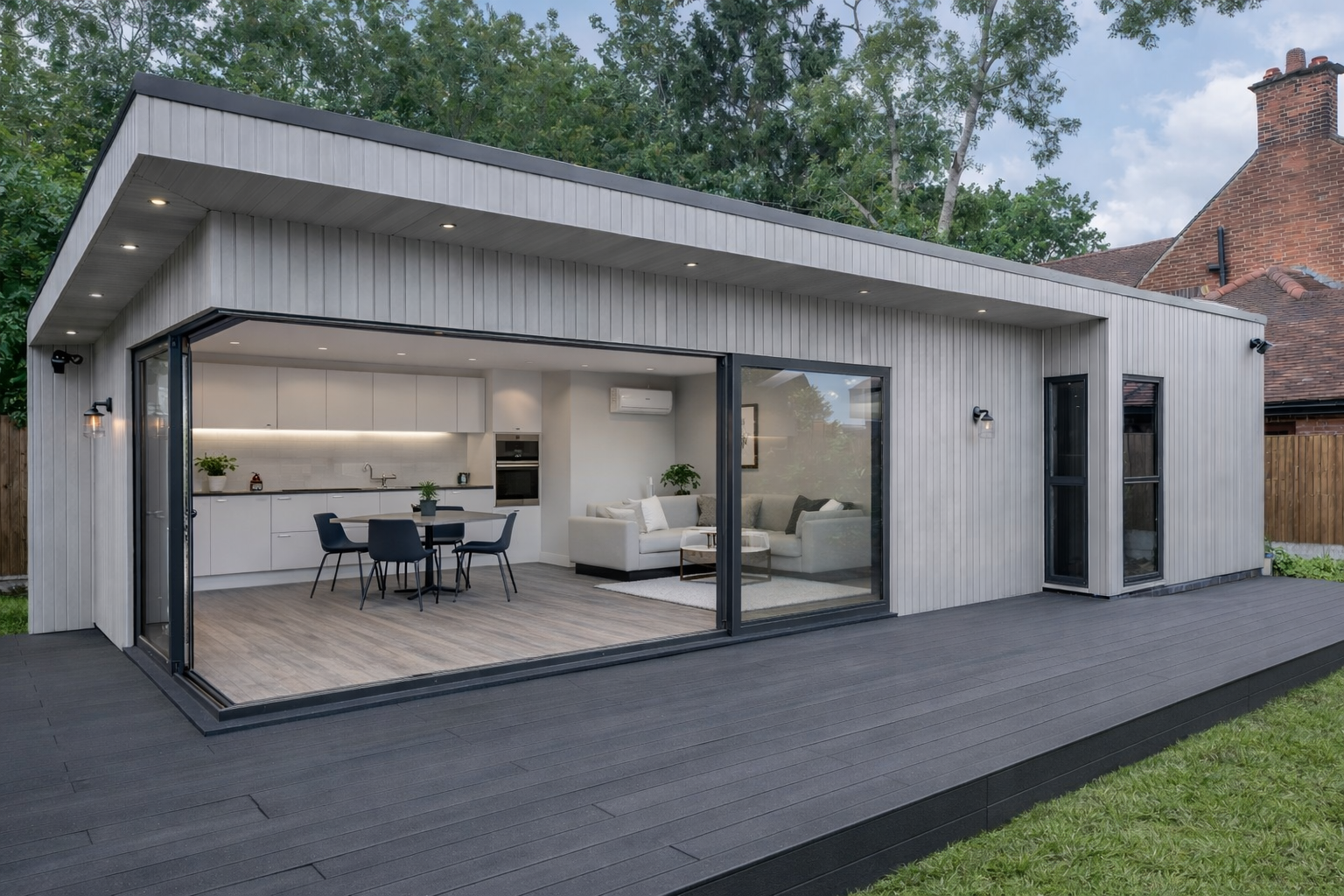
Scrw Pile Foundations
Metal Frame Construction
Thermal Efficiency
STEEL FRAME CONSTRUCTION
Here are the facts
Myth-busting steel frame garden rooms: cold bridging, insulation & real thermal performance
Steel frame construction sometimes gets labelled as “cold” or “thermally inefficient”. That idea usually comes from how metal behaves when it’s left exposed through the insulation layer — not from steel frame construction itself.
Here’s the truth:
Myth 1: “Steel frames are cold, so they must create cold bridging everywhere.”
Reality: Steel can create thermal bridges if the insulation layer is interrupted by steel members (for example, insulation only between studs). Research shows that if you swap timber for steel without redesigning the wall build-up, the wall’s “clear wall” thermal resistance can drop significantly (one widely cited study notes up to ~25% reduction in typical sections).
But modern steel-frame detailing tackles this head-on using a “warm frame” approach:
- keep the structure on the warm side, and
- use continuous insulation layers to prevent heat bypassing through the studs.
Industry guidance on light steel framing highlights that in “warm frame construction” cold bridging of the external fabric is avoided, and that measured U-values can compare well with theoretical values when detailed correctly.
Myth 2: “Cold bridging can’t be solved in steel frame buildings.”
Reality: Cold bridging is a design issue — it’s solved by continuity of insulation and correct junction detailing.
Thermal bridges happen wherever insulation is penetrated by a more conductive material (like steel) or where insulation is discontinuous at junctions (corners, wall-to-roof, openings). They can increase heat loss and lower internal surface temperatures.
The most effective strategy is simple and proven:
use continuous insulation that wraps the structure, keeping the insulation layer unbroken.
Our approach: why we wrap our frames internally and externally in Celotex
We don’t rely on “between-stud only” insulation.
Instead, we design our garden rooms so the steel frame is thermally protected by continuous Celotex insulation layers on the internal and external sides where the build-up allows. This creates an insulated envelope that dramatically reduces thermal bridging pathways and helps deliver consistent real-world performance.
Celotex GA4000 PIR boards have a declared thermal conductivity of 0.022 W/m·K (lower = better insulating performance), helping you achieve strong U-values with efficient thicknesses.
What this means in plain English:
- The insulation is doing the heavy lifting, not the steel.
- The steel frame stays closer to internal temperatures when it’s kept inside the insulated envelope.
- Cold bridging risk is designed out by maintaining insulation continuity and correctly detailing junctions.
Myth 3: “Steel frame can never be the most thermally efficient option.”
Reality: Thermal efficiency is achieved by the whole system — structure + insulation strategy + airtightness + detailing.
Steel frame offers major advantages for high-performance garden rooms because it is:
- dimensionally stable and consistent (straight walls, true openings, reliable tolerances)
- ideal for precision build-ups and repeatable performance
- well suited to warm frame designs where thermal bridging is controlled and U-values are delivered in practice
When you combine that structural accuracy with a continuous insulation strategy (like our internal/external Celotex wrap) you get a garden room that’s engineered to stay warm, comfortable, and energy-efficient.
The bottom line
Steel isn’t the enemy — unbroken insulation is the solution.
Steel frames only become a “cold bridge problem” when the insulation strategy is incomplete. With a properly designed warm-frame build-up and continuous Celotex insulation layers, thermal bridging is significantly reduced and effectively controlled, helping deliver a truly thermally efficient garden room.
U-value is a measure of how much heat energy passes through a building element (wall, roof or floor).
The lower the U-value (measured in W/m²·K), the better the insulation performance — meaning you lose less heat and spend less on heating.
A typical energy-efficient garden room roof or wall build-up will aim for U-values significantly below 0.18 W/m²·K, which is in line with UK guidance for insulated structures like garden rooms.
🧱 Example wall build-up (from outside → inside)
- External cladding or board
- Structural steel frame
- Continuous external Celotex PIR insulation layer
- Internal lining board
- Internal Celotex PIR insulation layer behind the lining as required (if part of internal finish)
💡 When Celotex PIR insulation is placed continuously on either side, and ideally wrapping around the steel frame rather than just between studs, it closes off the heat-loss pathways that lead to thermal bridging — keeping temperatures consistent all the way through the wall or roof.
Celotex PIR boards have a very low thermal conductivity (λ ~ 0.022 W/m·K), meaning they’re excellent at resisting heat flow and help achieve very low U-values with thinner insulation layers.
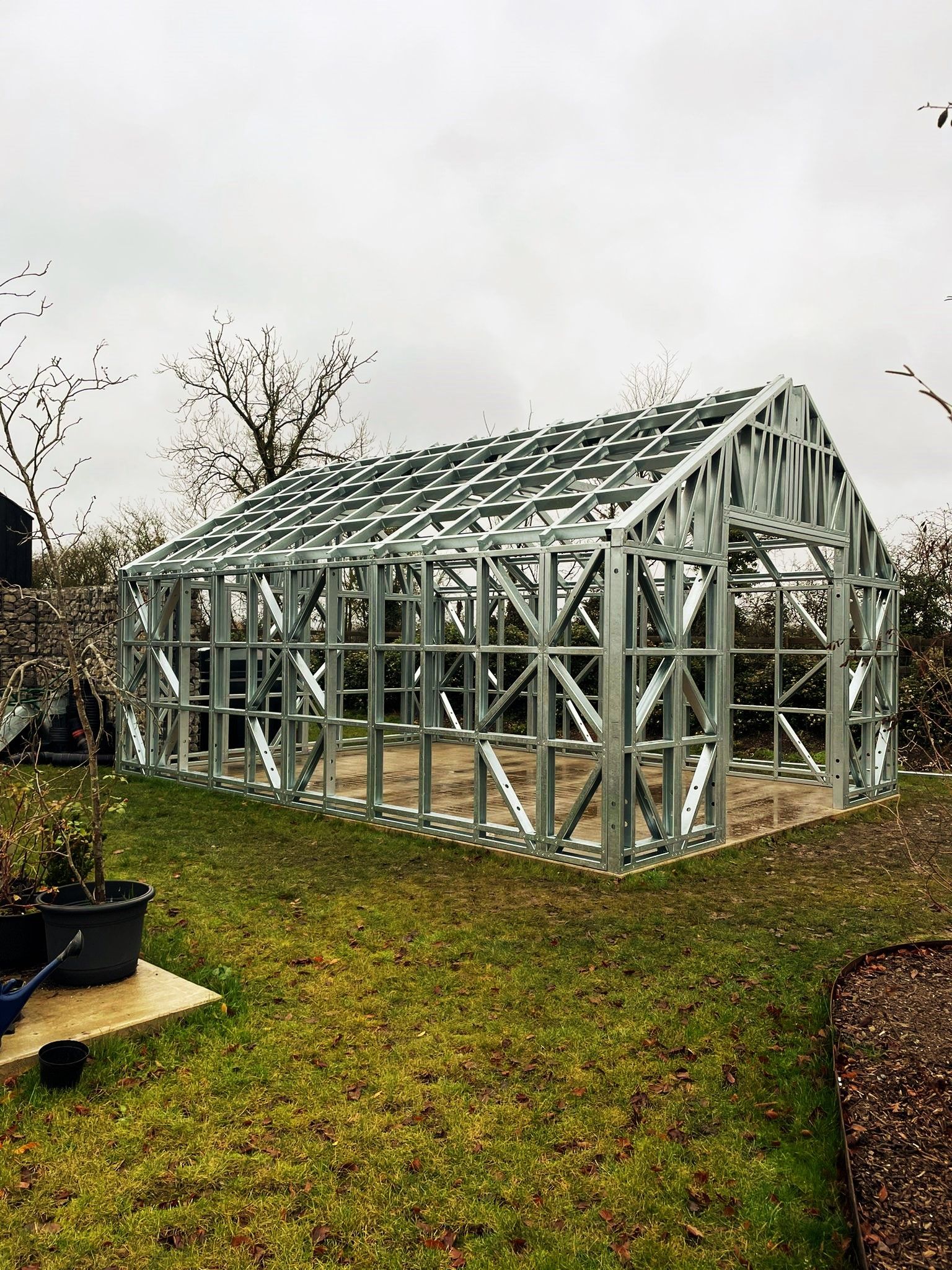
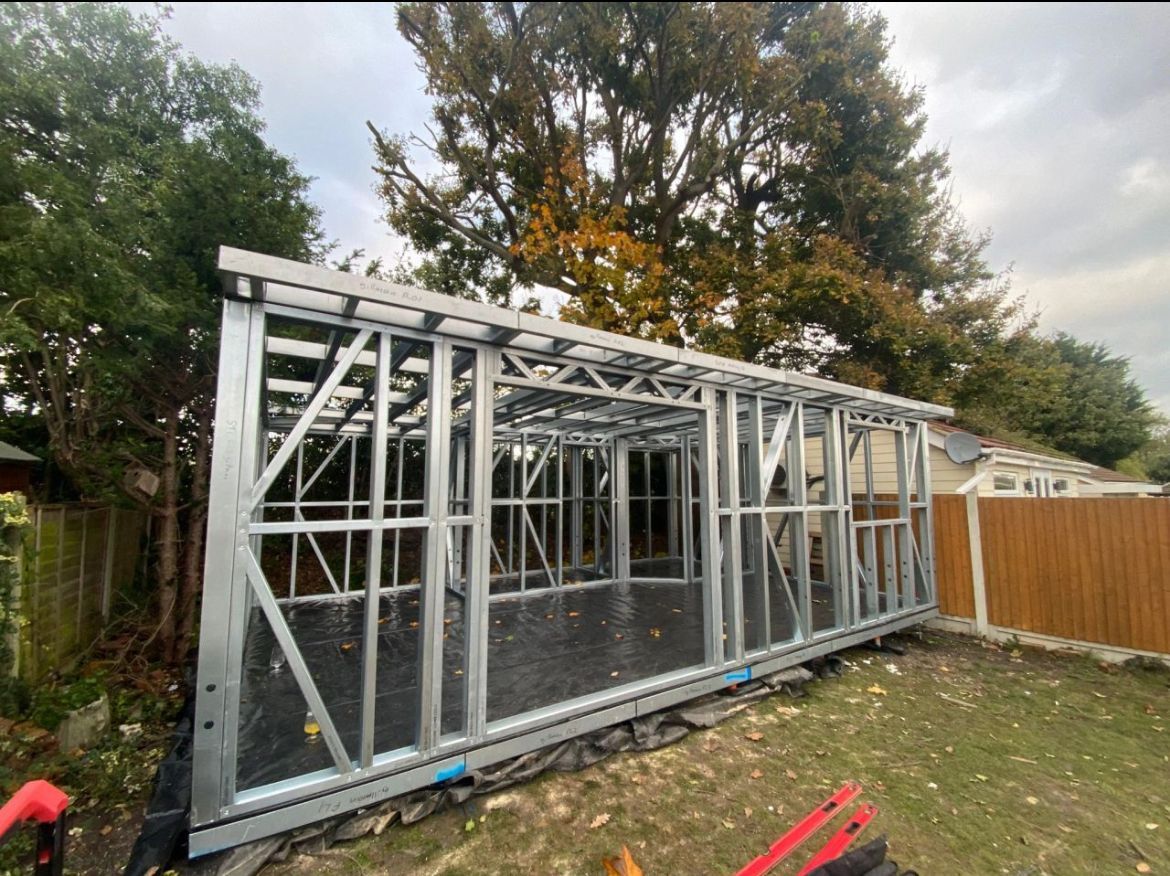
All of our Frames are built to the highest standard ensuring your investment is built to last.